In autumn, gutters and downpipes quickly fill up with leaves and moss. Read how a blockage forms, what goes wrong during a cloudburst and how to keep the drainage clear.
By the end of November most leaves are on the ground, but a good share of them has ended up in the gutter. There they stay, get wet and, together with moss, seeds and sand, form a thick layer that holds back the water. Taking a quick look at the gutter in spring and autumn saves a lot of trouble.
How a gutter and downpipe become blocked
With every shower, leaves are washed towards the gutter outlet. They pile up there, especially when moss also comes down from the roof tiles. Moss holds water and sometimes keeps growing in the gutter itself. After a few months the outlet can be almost completely closed.
Whatever does pass through the outlet disappears into the downpipe. In the bends and at the bottom, where the pipe meets the ground, this material easily gets stuck. There, leaf remains cake together into a plug.
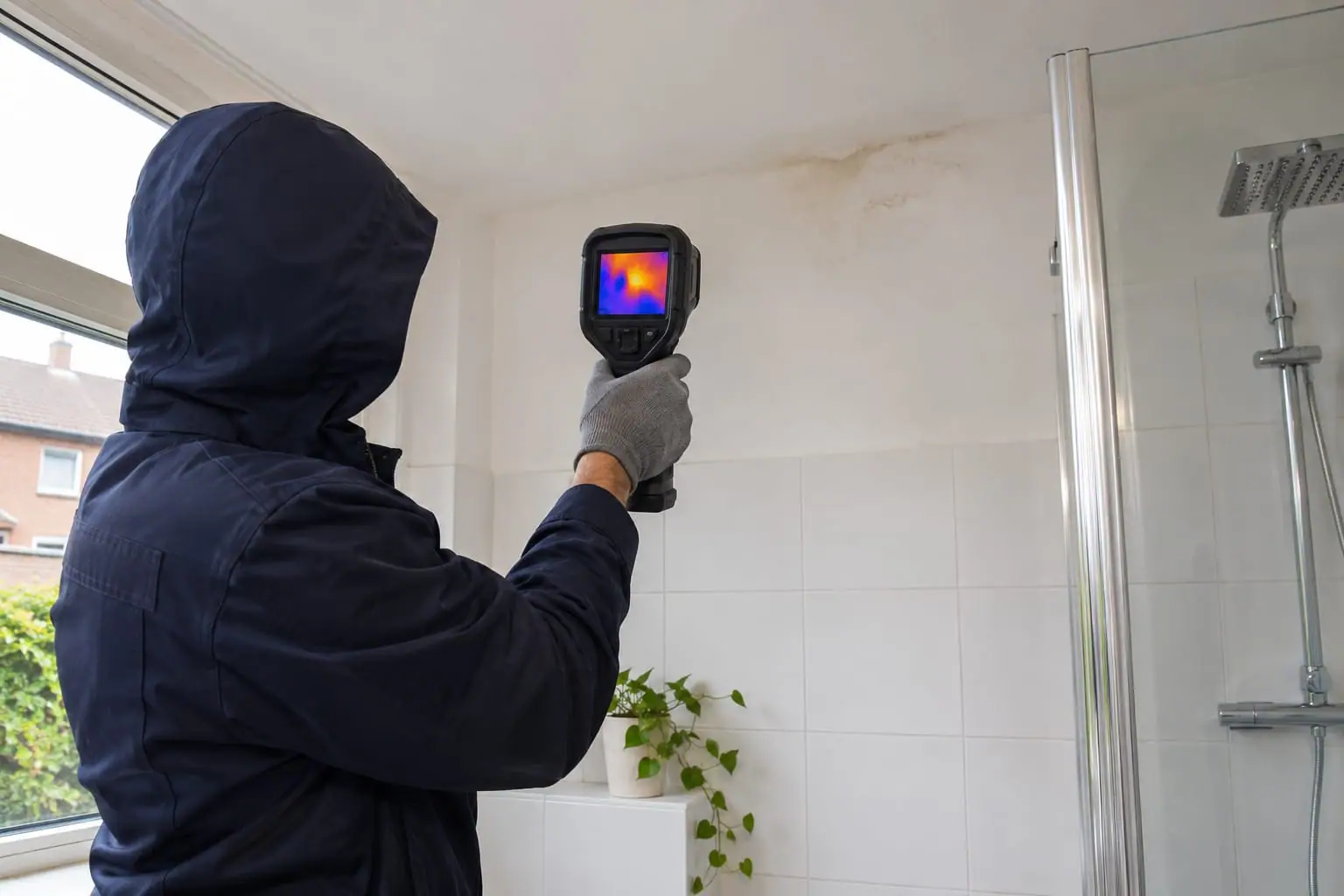
During a cloudburst a lot of water falls on the roof in a short time. A gutter that is half full of leaves cannot cope with it. The water spills over the edge and runs down the façade. This can cause damp patches in walls, damage the mortar joints and bring water to the foundations or into a cellar. If the downpipe itself is blocked, the water stays inside and a joint may start to leak.
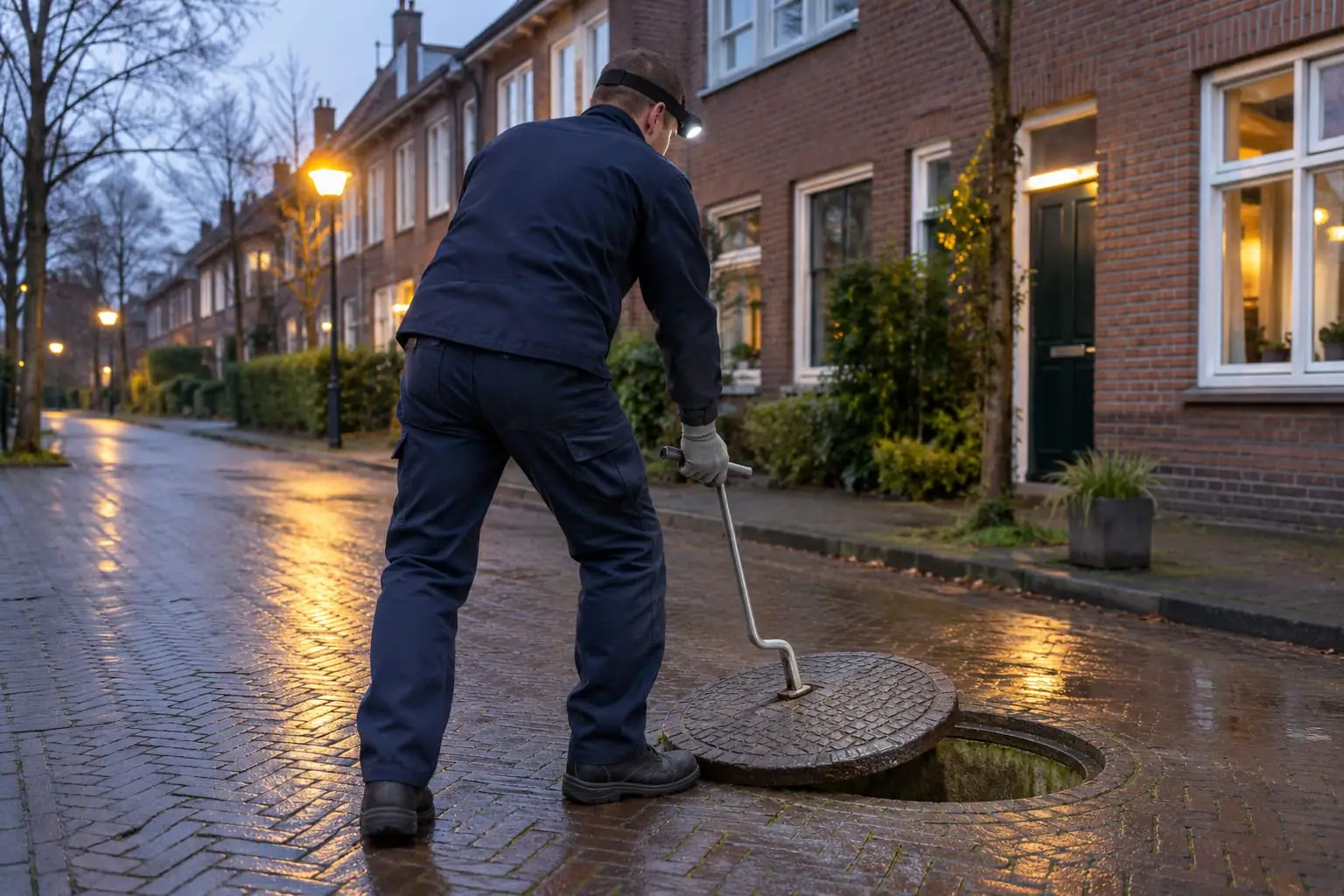
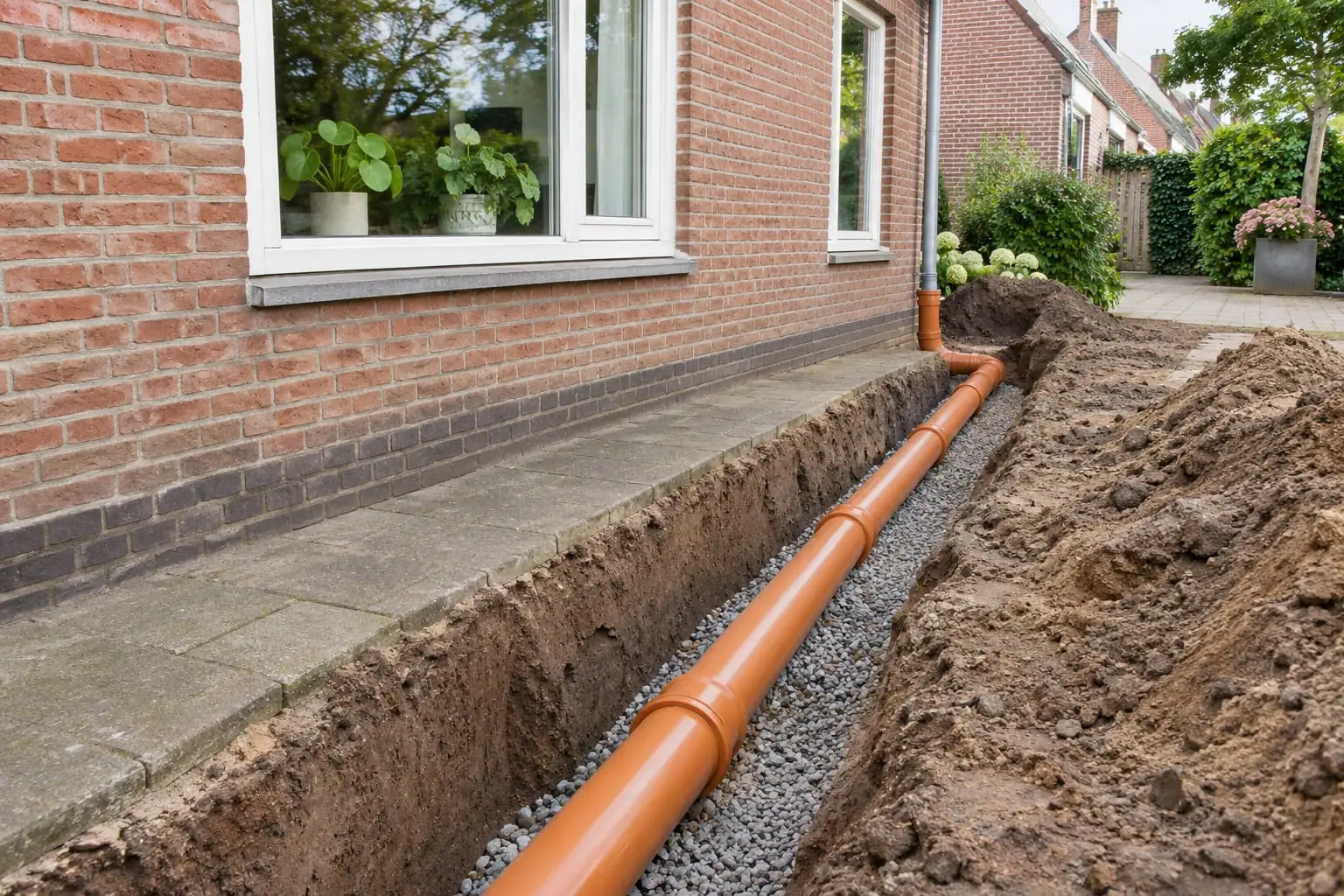
Many downpipes, particularly on older houses, are connected to the sewer. The rainwater then flows through the same pipe as the waste water from the toilet, shower and kitchen to the municipal sewer. Leaves and sand carried along through the downpipe can settle further down in your house connection and cause a blockage there. In newer neighbourhoods rainwater is often drained separately or soaks into the ground. Whether your downpipe is connected to the sewer cannot always be seen from the outside.
What does this mean for you?
A few simple habits will keep your drainage clear.
- Clean the gutter at least once a year, preferably after the leaves have fallen. Only work from a sturdy ladder on level ground and leave work on a high or steep roof to a professional.
- Fit a leaf guard or small basket in the gutter outlet. It stops leaves, but it also needs emptying regularly, otherwise it acts as a cap.
- Have a silt trap fitted at the bottom of the downpipe, so you can remove dirt before it disappears into the pipe.
- Do not use chemical drain cleaners in the downpipe; they do not dissolve leaves and are bad for the pipe and the environment.
If water keeps standing while the gutter is clean, or water rises from a drain in the garden, the blockage is probably deeper in the pipe. You can read more about clearing it on the page about drain unblocking.